

The 5 Most Surprising Facts About Shipping Containers
1. The Corrugated Walls Aren’t as Structurally Sacred as They Look—Until You Cut Them
A container’s greatest vertical strength is concentrated in its four corner posts and corner castings. When containers are stacked aboard a ship, those corners align and transfer the load downward. The corrugated sidewalls provide rigidity, but they aren’t conventional house walls that can be casually removed.
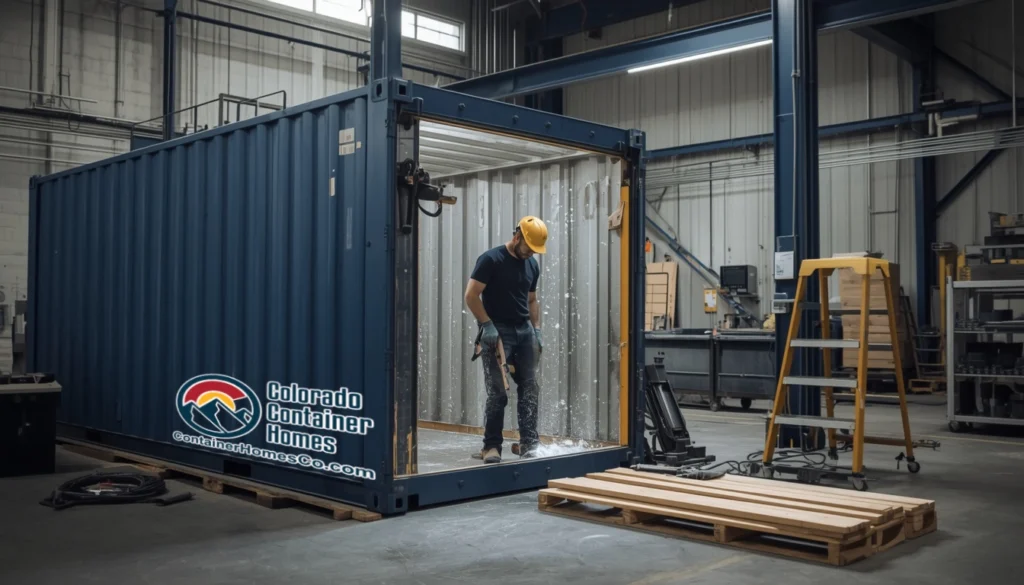
Cut a small door opening and the change may be manageable. Remove most of one side to join two containers, however, and you may need an engineered steel frame to replace the lost stiffness. This is why a heavily modified container home can require more structural steel than buyers expect. The International Code Council’s container-building guidance exists partly to help engineers and building officials evaluate exactly these modifications.
2. Every Legitimate Shipping Container Has Something Like a Passport
The letters and numbers painted on a container aren’t random inventory markings. An international container normally carries a unique BIC identification code consisting of an owner prefix, an equipment-category identifier, a six-digit serial number and a check digit.
That final digit is calculated mathematically from the preceding characters. It allows computer systems to catch many transcription errors when a container is recorded at a terminal, transferred to a train or loaded aboard a ship.
A freight container used internationally should also have a valid CSC safety-approval plate. This records information such as its approval reference, date of manufacture and allowable stacking load. For a container-home buyer, those markings can help establish what the box actually is. A fresh coat of charcoal paint may look handsome, but it isn’t provenance.
3. A “40-Foot Container” Doesn’t Give You 320 Square Feet of Living Space
Multiplying 40 feet by eight feet produces 320 square feet, which is why that figure appears in countless container-home listings. It is the container’s approximate exterior footprint—not its usable interior floor area.
A standard 40-foot container is narrower and shorter inside because its walls, doors and structural members consume space. After adding closed-cell insulation, interior framing, wallboard and utility chases, the finished room becomes narrower still. A homeowner expecting a full eight-foot-wide room may end up with something closer to a corridor that has developed strong opinions about throw pillows.
Height disappears too. A standard container is approximately 8 feet 6 inches tall externally, while a high-cube model is one foot taller. That extra foot can be extremely valuable once the ceiling contains insulation, wiring, lighting and mechanical equipment. This is why high-cube containers are frequently preferred for housing even when the raw container costs more.
4. “Wind and Watertight” Doesn’t Mean Ready for Human Occupancy
In the used-container market, wind and watertight generally means the container has no obvious openings that allow wind or rain to enter. It does not mean the box is insulated, condensation-proof, chemically clean or suitable for conversion into a bedroom.
Steel is an aggressive conductor of heat. Without a correctly designed insulation and moisture-control system, interior water vapor can condense against the cold shell and remain hidden behind finished walls. Building scientist Joseph Lstiburek’s wonderfully blunt analysis of container buildings describes the steel enclosure as a giant thermal bridge—an oven in hot conditions and an icebox in cold ones.
Used containers may also have floor damage, corrosion, repairs or an uncertain cargo history. Buyers planning an occupied structure should inspect the container rather than relying entirely on a sales grade. “Cargo worthy” answers a shipping question. It doesn’t answer a residential-health question.
5. Shipping Containers Are Designed to Breathe
A container looks like a sealed steel vault, but standard dry containers normally include small vents near the upper portions of their sidewalls. These vents allow pressure and temperature changes to equalize and help limit moisture accumulation during transportation.
That doesn’t make the container adequately ventilated for people. Once converted into a house, office or pool-equipment room, it needs purpose-designed ventilation appropriate to its use. Original vents can also complicate air-sealing work if the builder simply hides them behind insulation.
The reverse is equally important: sealing every gap without planning mechanical ventilation can create a remarkably durable box with remarkably poor indoor air. Container construction rewards people who remember what the object was designed to do. It was built to move cargo safely across oceans—not to manage shower vapor, cooking moisture, sleeping occupants and an air conditioner fighting an August afternoon.